
The Italian barbershop renaissance
For years the barber was described as a trade on its way out. Then the shutters went back up, often run by people in their thirties.
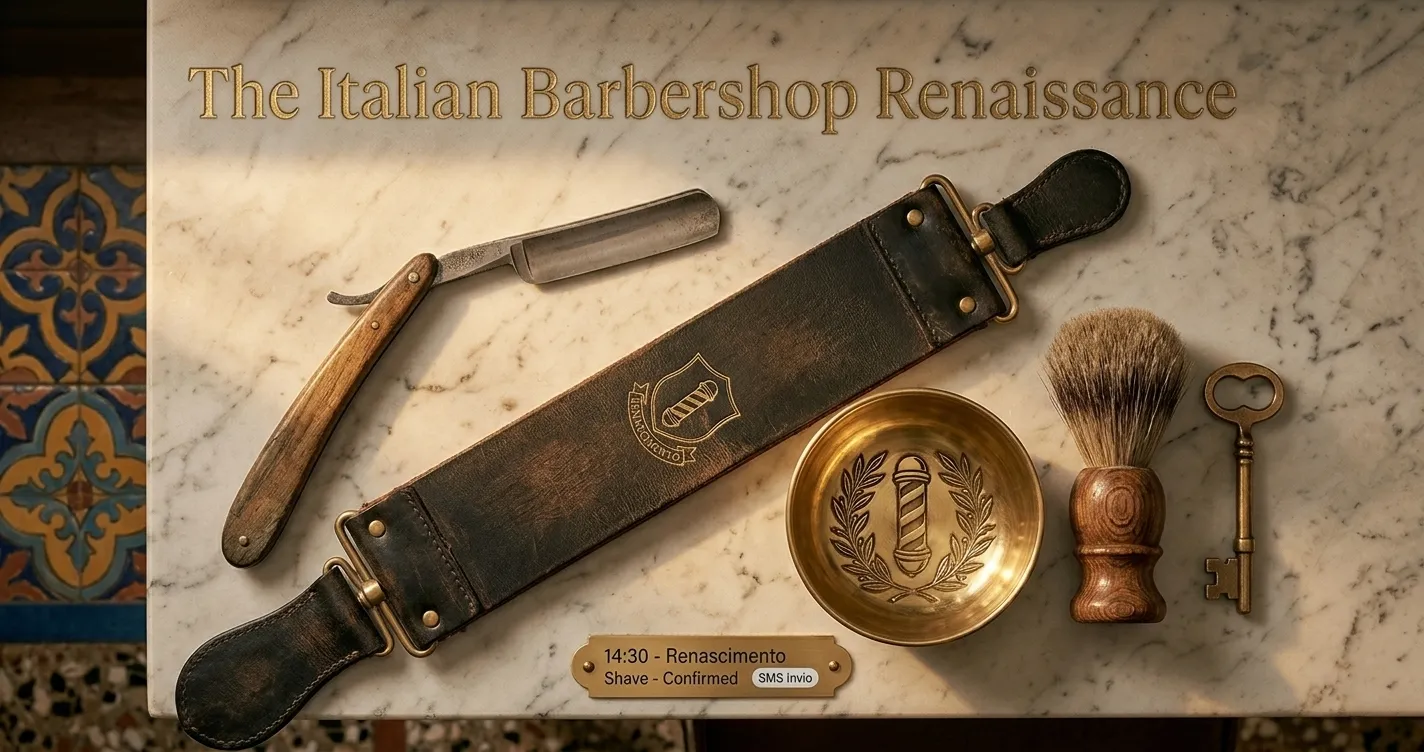
There was a stretch, from the nineties into the early two thousands, when the barbershop looked destined to dissolve into the unisex salon. The straight razor was for nostalgics and the beard was something to tidy up quickly. That stretch is over, and the people who reopened those shops did not do it by imitating the past.
The trade became a choice again
The clearest change is who stands behind the chair. Not only sons inheriting a father's shop, but people who picked this work after doing something else, and who treat it as a craft in the full sense: continuous training, tools kept properly, a recognisable way of working.
Time came back with that choice. The ten minute cut still exists, but next to it sits the hour long service, hot towel and a shave done the way it should be. This is not nostalgia. It is understanding that people will happily pay for something they cannot do at home.
The shop as a place, not just a service
People who walk into a barbershop today stay longer than they need to, and that is deliberate. The music, the coffee, the sofa by the door: that is the part of the job which never appears on the price list but decides whether somebody comes back. In many towns the shop has gone back to being somewhere you stop and talk, with the difference that now people talk about it outside too.
Where digital belongs, and where it does not
This is the interesting part. The shops doing best are not the ones that digitised everything, they are the ones that digitised the boring half. The diary, the reminders, the end of day takings, the shelf of pomades: work that used to steal time and attention and now runs by itself.
What stays strictly analogue is the relationship. Nobody wants to be greeted by a screen, and advice about your own hair remains a conversation between two people. The tool exists to free up the minutes for that conversation, not to replace it.
A generation that thinks like a business
The other shift is less visible but it carries weight. Many barbers now know what they take per service, which hours pay and what it costs to leave a product sitting on the shelf. Not because they love numbers, but because those numbers take two minutes to read on a phone instead of being reconstructed with the accountant at year end.
That is where the difference lies between a shop that survives and one that hires a second barber. The craft is the same as it always was. What changed is everything around it.
In short
- Barbering came back because it became a deliberate career again, not a fallback.
- The long, careful service is why people pay more.
- The shop matters as a place, and word of mouth is now public.
- Digitise the boring half, never the relationship with the client.
- Barbers who know their own numbers decide sooner and get it wrong less often.
Found it useful? Pass it on to another barber.